Timing a Bright ISS Pass Without an App Open the Whole Time
A pass is over in about six minutes. Here's the low-effort routine for actually being outside, facing the right way, when it happens.
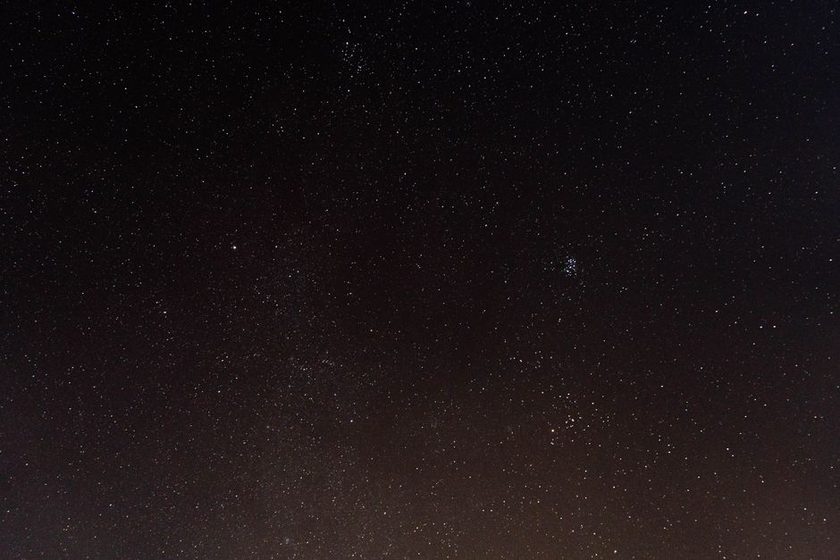
The first bright pass I ever caught on purpose, I nearly missed by watching my phone instead of the sky. Magnitude -3, rising in the west-northwest, six minutes of total visibility — and I spent the first ninety seconds of it staring at a countdown timer instead of looking up, confirming a number I already had memorized. By the time I remembered why I'd walked into the yard, the station was already past the tree line and I'd burned through a third of the pass proving to myself that the app was right. That was the last time I treated a pass prediction as something to babysit in real time. It's a piece of orbital data, not a livestream, and the difference matters if the goal is actually seeing the thing cross your sky instead of a screen telling you it did.
Why the App Should Close Before You Walk Outside
A phone screen at full brightness undoes ten or fifteen minutes of dark adaptation in about four seconds, and a bright ISS pass rewards exactly the eyes an app screen just ruined. The station itself is easy — brighter than anything else in the sky except the Moon and Venus, so you don't need trained night vision to spot it once it's up. What you do need dark-adapted eyes for is catching it early, in the first few seconds after it clears your horizon obstruction, while it's still dim from atmosphere and distance. Miss that window looking down at a countdown, and you pick the pass up ten seconds late and twenty degrees higher than you meant to.
What a Pass Prediction Is Actually Telling You
Every prediction line — whether it comes from a tracking site, a printed schedule, or an email alert — reduces the same handful of numbers to a single row: a start time and compass direction, a peak time with maximum altitude and brightness, and an end time and direction. Read the night before, those numbers are a script. Read mid-pass on a lit screen, they're a distraction. The trick is doing all the reading in advance, so the only thing left to do outdoors is look up at the right angle and wait.
| Field | What it means | Why it matters | What I do with it |
|---|---|---|---|
| Max altitude | Highest point above horizon, in degrees | Under ~20° means fences and rooflines may block most of it | Below 20°, I pick a spot with a clear view toward that side |
| Max magnitude | Peak brightness, lower number is brighter | Anything brighter than -2 is unmistakable even with streetlights nearby | I only set an alarm for passes brighter than -1.5 |
| Start azimuth | Compass direction it first appears | Tells you which direction to face when the clock starts | I note the nearest fixed landmark in that direction the night before |
| Duration | Total minutes visible, start to end | Under 3 minutes leaves almost no margin for being late outside | Short passes get the outdoor alarm bumped to 5 minutes early, not 2 |
| Enters shadow | Pass ends by fading, not by setting | The station can vanish mid-sky instead of dropping to the horizon | I don't keep scanning low after a "fades" pass — it's already gone |
The Night-Before Routine
This is the same habit I keep for almost every clear-sky decision, laid out in more general terms in everything I check the afternoon before a clear night. For a pass specifically, it takes about five minutes at the kitchen table. I scan the coming week's list, find the brightest and highest pass, and write down three things on an index card: the start time, the start direction, and one physical landmark — a chimney, a specific tree, a neighbor's porch light — that marks that direction from my actual yard. Then I set two alarms, not one: an indoor alarm ten minutes before start time, and a second alarm at the actual start time labeled "phone in pocket, look at the landmark." The card goes in a coat pocket, not a bookmark folder.
The pass doesn't care whether I'm ready. Six minutes of orbital mechanics run on a schedule set by physics, not by how quickly I can unlock a screen and find the right app.
Before you walk outside
- Confirm start time and direction once, at full screen brightness, indoors
- Note one fixed landmark in the start direction, not just a compass heading
- Set the phone to airplane mode or turn the screen face-down in a pocket
- Give your eyes at least five minutes outside before the predicted start time
Facing the Right Way When It Starts
Standing in the yard without a screen only works if the landmark from the index card actually lines up. This is where the preparation from what a Bortle map doesn't tell you until you're standing in the yard pays off twice over — the same walk-around that tells you where the sky glow sits also tells you which fence line, roofline, or tree is going to eat the first thirty seconds of a low pass. I plant myself facing the noted landmark two or three minutes early, eyes already adjusting, and wait for a steady point of light to separate itself from the fixed stars around it. It doesn't blink. It doesn't flicker with the streetlamp-orange tint that airplane lights pick up near the horizon. It just gets brighter, moves at a pace you can track by eye without straining, and keeps climbing until it either fades into Earth's shadow or sinks back toward the opposite horizon.
Telling It Apart From a Plane or a Flare
- Airplanes blink — a steady red or white strobe, often with a slower-moving companion light nearby.
- Satellite flares brighten sharply for a few seconds and then fade back to near-invisible, rather than holding steady brightness across the pass.
- The ISS holds a steady, non-blinking brightness that rises gradually to a peak and then either fades out mid-sky or drops steadily toward the horizon — no strobing, no companion lights.
A note on prediction accuracy
Pass predictions are estimates built from the station's tracked orbit, and that orbit shifts slightly over time from atmospheric drag and periodic reboosts. Times published more than a day or two in advance can drift by a minute or more by the actual evening, and the visible brightness of any pass depends on local weather and horizon obstructions that no prediction service can see. Checking the same pass again within a few hours of dusk, rather than relying on a forecast from a week earlier, is the simplest way to keep the numbers on the index card honest.