Why the Best First Upgrade Is a Better Pair of Binoculars
A wider aperture telescope sounds like the obvious next step. In a lit backyard, it usually isn't — here's the case for spending on glass you already own.
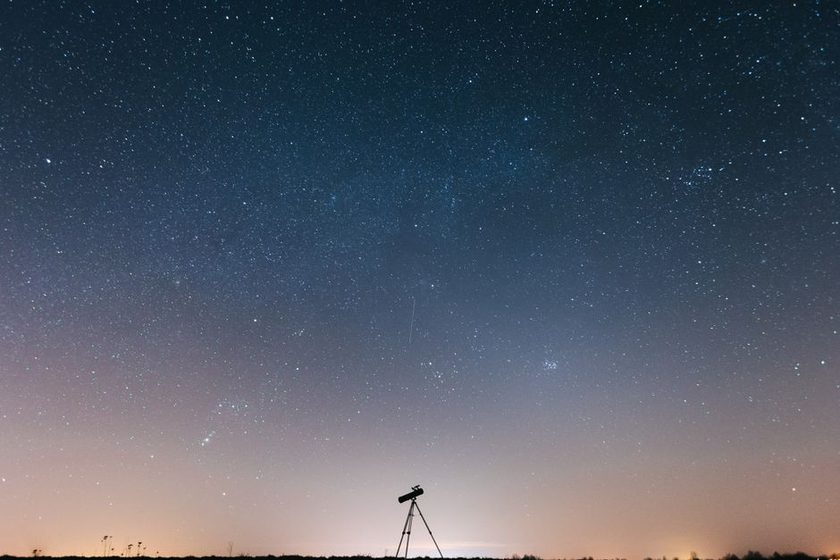
The night Jupiter cleared the neighbor's roofline last October, it came in bright and steady through a cheap tripod-mounted pair of 10x50s — four moons lined up in a tidy row, nothing lost to a shaking hand. That view is usually what starts the telescope conversation the next morning. A wider mirror promises more light, more resolution, more of everything a spec sheet can measure, and on paper the jump from a handheld binocular to a 6-inch reflector looks like the obvious next purchase. From a patio two houses down from a working streetlight, it rarely plays out that way. The binoculars already sitting in the hall closet, set up properly, tend to earn more actual minutes of use than the bigger scope ever does — and it's worth working through why before the aperture money gets spent.
What a Spec Sheet Doesn't Know About a Lit Yard
Aperture math is honest as far as it goes: a 150mm mirror gathers roughly five times the light of a 50mm binocular lens, and under a genuinely dark sky that difference shows up as fainter stars, more detail on planets, and nebulae that hold together instead of dissolving into a smudge. The problem is that a suburban yard isn't gathering starlight against a black background. It's gathering starlight against a background that's already glowing — porch lights, a gas station sign three streets over, the general orange wash that sits over most Bortle 6–7 neighborhoods after dark. A bigger mirror scoops up more of that glow right alongside the extra starlight, so a meaningful share of the theoretical gain gets eaten by contrast loss before it ever reaches the eyepiece. The chart on the box was drawn for a different sky than the one over most driveways.
The Setup-Time Tax on a Telescope
A reflector needs to sit outside long enough to reach ambient temperature before the view sharpens up, plus a finder-scope check, plus — sooner or later — a look at collimation if the tube has been bumped getting it through a doorway. None of that is a complaint about telescopes; it's just the honest cost of the format. A pair of binoculars needs none of it. They come off a hook by the back door, and thirty seconds later Jupiter is in view. That gap matters more than it sounds like it should, because clear windows in a lit neighborhood are rarely generous — a gap between cloud bands, forty minutes before a work night, the kind of stretch covered in more detail in the afternoon checklist that decides whether a night is worth going out for at all. A telescope that needs fifteen minutes of setup can lose half a short window before a single photon reaches the eye.
Where the Real Gain Is Hiding: Stabilization, Not Aperture
Handheld binoculars above about 8x tend to shake enough to blur out fine detail — Jupiter's moons smear into short streaks, and a hand tremor that seems minor in daylight becomes obvious the moment magnification climbs. That shake often costs more resolved detail than a bigger mirror would add back, which flips the usual upgrade logic on its head: the cheapest fix isn't a wider lens, it's removing the wobble already present in the current one. A simple tripod adapter, a monopod braced against a porch rail, or an image-stabilized model all solve the same problem for a fraction of what a telescope costs, and the improvement is immediate rather than theoretical.
Four extra inches of mirror never fixed a single shaking hand. A three-dollar tripod adapter did.
A Rough Comparison of the Upgrade Paths
None of the figures below are exact — cost tiers shift by brand and sale, and "gain" is a judgment call from one Bortle 7 yard, not a lab measurement. Still, laid out side by side, the pattern of diminishing returns on aperture alone tends to hold.
| Upgrade path | Setup time | Cost tier | Typical gain at Bortle 6–7 |
|---|---|---|---|
| Handheld 8x42, already owned | Grab and go | $0 | Baseline — usable but shake-limited above 8x |
| Same binocular + tripod adapter | Under a minute | Low | Noticeably steadier view; often the biggest single jump |
| Image-stabilized binoculars | Grab and go | Mid | Steady handheld detail, no tripod needed |
| Entry 6-inch reflector | 10–20 min cooldown + alignment | Mid–high | More resolving power, largely on brighter targets |
| 8-inch and larger reflector | 20+ min, heavier collimation care | High | Real deep-sky gain — mostly wasted without a darker sky trip |
Three Small Fixes That Outperform a Bigger Scope
Before any aperture purchase, these tend to move the needle more, for less money, in a lit backyard specifically:
- A tripod adapter and a cheap photo tripod. Removes handheld shake entirely, which usually matters more than a wider lens.
- Matching exit pupil to the sky, not the catalog. A 7x50 tends to suit a glow-washed yard better than a 10x50 pushed past what the sky can actually support.
- A monopod for anything without a tripod thread. Half the stability gain of a full tripod, for a fraction of the bulk, and it fits by the back door.
Before You Buy: Three Questions for a Lit Backyard
Worth answering honestly before a telescope purchase, not after:
- Is the current binocular actually stabilized, or still being held freehand at 10x?
- How many minutes, on a typical clear night, pass between "step outside" and "target in view"?
- Which targets from a recent night — planets, the Moon, a bright cluster — felt genuinely aperture-limited, versus glow-limited or shake-limited?
When the Telescope Upgrade Finally Pays Off
None of this argues against ever buying a telescope. Once the shake and setup-time issues are actually solved, some targets do run into a real aperture ceiling — the fainter deep-sky objects, or fine planetary detail on a night of unusually steady air. The point is ordering: a few months of logging what specifically falls short from stabilized binoculars tends to produce a much sharper buying decision than jumping straight to a wider mirror on the strength of one good Jupiter night. It also lines up with how uneven a "Bortle 6" label can be in practice — worth reading alongside what a Bortle map doesn't tell you until you're standing in the yard, since the actual glow over one fence line rarely matches the printed number.
A note on what this is: this reflects gear tradeoffs observed from one Bortle 6–7 backyard over repeated ordinary nights, not a lab test or a review of any specific product line. Actual results depend on local sky glow, horizon obstructions, and how a given pair of hands holds up at a given magnification — treat it as a framework for comparison, not a guarantee of what any one setup will show.